Finasteride is one of the best-known and most widely used treatments for male pattern baldness. By taking finasteride each day, thousands of men are able to maintain their hair and reduce the effects of genetic hair loss. This is why it remains the most frequently prescribed option among hair transplant surgeons, with over 72% often or always recommending it to patients [1].
Finasteride works for male pattern baldness and is generally effective, but it also comes with potential side effects and may not be suitable for everyone.
In this guide, you’ll learn:
- How finasteride works
- How effective finasteride is
- How long finasteride takes to work
- When finasteride does not work
How does finasteride work?
The best way to explain how finasteride works is to consider what class of medication it comes from: 5-alpha-reductase inhibitors. 5-alpha-reductase is a naturally occurring enzyme that triggers the conversion of testosterone into dihydrotestosterone (DHT).
DHT is a male sex hormone that plays a key role in the development of male pattern baldness, as well as many other processes in the body, particularly those linked to male development such as body and facial hair growth [2]. It binds to hormone receptors in the scalp hair follicles, causing them to shrink, which slows hair growth and can eventually stop hair production altogether.
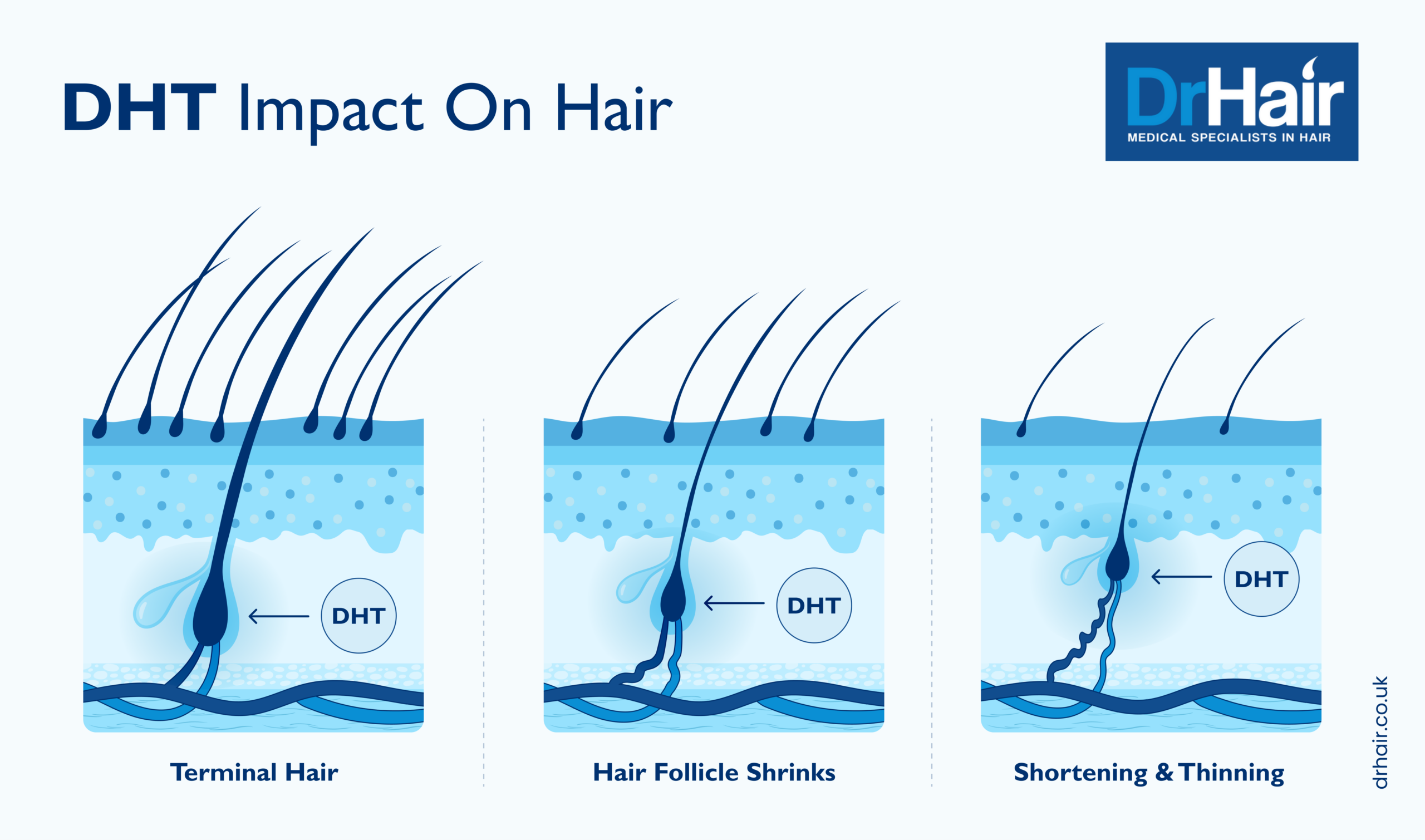
By blocking the activity of the 5-alpha-reductase enzyme, finasteride reduces the amount of DHT produced by the body. As a result, there is less DHT available to bind to hair follicles, leading to a reduced impact on hair growth.
How effective is finasteride?
Finasteride has been shown to be highly effective at slowing hair loss. Research indicates that it can reduce the amount of DHT produced by the body by as much as 70% [3].
Although findings vary slightly between studies, there is broad agreement that finasteride delivers strong and consistent results in slowing the progression of male pattern baldness, usually also over long-term use [4-6]. In one study, researchers found that 83% of men with hair loss at the crown experienced no further loss after two years of taking finasteride, while 70% of men with a receding hairline saw the same outcome after one year [6].
Does topical finasteride work?
Topical finasteride works and is an alternative to oral finasteride. Research suggests that topical finasteride may help treat androgenetic alopecia, with several trials showing it can slow hair loss and sometimes support regrowth [7-9]. Though topical finasteride can be effective, it’s reported that oral finasteride is up to around 20% more effective [7, 10].
We’ve already summarised the most recent research and medical opinion in our other article: does topical finasteride work.
How long does it take for finasteride to work?
Most men begin to notice results from finasteride after around 3 to 6 months of consistent use. Early changes are usually subtle, such as reduced shedding in the shower or on a pillow.
The visible regrowth from finasteride typically occurs after 6 to 12 months. In one study, nearly 92% of men taking 1 mg of finasteride daily saw improvement within four months [11].
How quickly finasteride works can vary depending on several factors, including:
- Dose: The standard amount for hair loss is 1 mg per day.
- Consistency: Missing doses or splitting tablets can delay results.
- Hair growth cycle: People with longer resting or shedding phases may take more time to see changes.
- Initial shedding: Temporary shedding is common at the start of treatment and may last up to a month, with regrowth beginning once it settles.
When does finasteride not work?
Though it works for many, finasteride may not always work for everyone. There are several common reasons why results may be limited or absent:
- Wrong type of hair loss.
Finasteride is only effective for male pattern baldness. Other forms of hair loss, such as alopecia areata or telogen effluvium, do not respond to this treatment. - Hair loss is too advanced.
Finasteride works best in the early stages. If hair loss is already extensive, the benefits may be minimal and surgical options may be more appropriate. - Not enough time on treatment.
It typically takes at least 3 to 6 months to see results. Stopping or judging effectiveness too early can make it seem ineffective - Inconsistent use.
Taking less than the recommended dose or skipping applications can significantly reduce results.
Results have plateaued.
Most improvement occurs within the first year. Over time, the effects can level off, especially for long-term users [4].
Get your finasteride at DrHair now
Finasteride is one of the most reliable and well studied treatments available for male pattern baldness. By reducing DHT levels, it helps slow the progression of androgenetic alopecia and allows many men to maintain their existing hair for years.
For most patients, finasteride works best when started early and taken consistently. Results are usually gradual, with reduced shedding appearing within the first few months and visible improvement often developing over 6 to 12 months. However, finasteride is not a universal solution, and you may also consider an alternative hair loss treatment.
If you are considering finasteride, the best approach is to speak with a qualified medical professional who can confirm the type of hair loss you have and help you weigh the benefits against potential side effects. With the right expectations and long term use, finasteride remains one of the most effective non surgical options for preserving hair in men with male pattern baldness.
FAQ
Finasteride may not appear to be working if it has not been taken for long enough, as results often take six to twelve months. It will also not work if the hair loss is not male pattern baldness. In advanced hair loss, regrowth may be limited because the medication mainly preserves existing follicles. Inconsistent use can also reduce effectiveness.
Male pattern baldness, or androgenetic alopecia, is a genetic form of hair loss caused by sensitivity to DHT. It typically leads to thinning at the temples and crown over time. Because it is driven by DHT, treatments such as finasteride can slow its progression.
Finasteride begins lowering DHT within days, but visible changes usually take three to six months. More noticeable thickening or regrowth may take up to twelve months of consistent use.
Six months may still be early, so continuing treatment is usually recommended. It is important to confirm the diagnosis and ensure daily use. If there is no improvement after twelve months, a specialist may suggest adding another treatment or considering alternative options.