
Finasteride shedding: what is it and how long does it last?

Medically reviewed by
Dr. Arora (Bmbs, Bsc)
Reading Time: 7 min. Published: 26/02/2026 Last Updated: 22/04/2026

Finasteride is a common hair loss treatment that’s been in use for many years now. It’s very successful, with some research finding that over 82% of men suffering from male pattern baldness stopped losing their hair whilst taking finasteride [1].

Finasteride shedding is a common side effect when men first start using this product. Though some initial hair loss can be initially concerning, this type of hair shedding is actually a normal and expected part of the treatment process. 

So what is finasteride shedding exactly? 

In this article, we’ll cover that and: 

  • How long finasteride shedding lasts
  • How much finasteride shedding is normal
  • An overall finasteride shedding timeline

What is finasteride and how does it work?
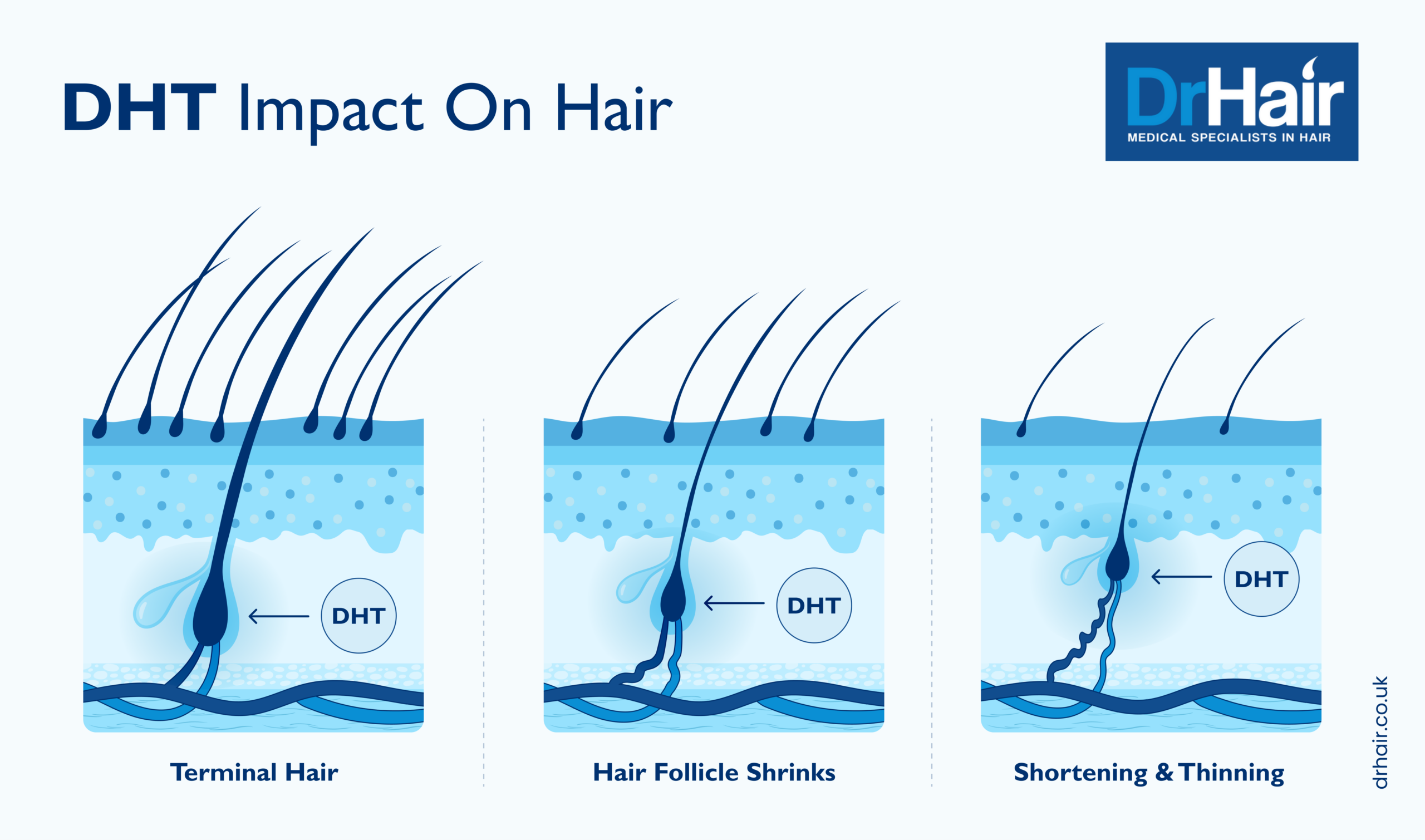
DHT impact on hair

Finasteride is a widely prescribed medication used to slow or prevent hair loss. It works by lowering levels of dihydrotestosterone (DHT), a hormone derived from testosterone. Finasteride does this by inhibiting the enzyme 5-alpha reductase, which converts testosterone into DHT. While DHT plays an important role in male development earlier in life, elevated levels in adulthood are linked to conditions such as benign prostatic enlargement and male pattern hair loss [2].

In the scalp, DHT binds to androgen receptors in susceptible hair follicles, gradually causing them to shrink and produce thinner, shorter hairs until growth may stop altogether. By reducing DHT levels, finasteride helps protect these follicles from miniaturisation. This can slow or halt further hair loss and, in some cases, allow weakened but still viable follicles to resume hair growth.

Why does finasteride cause shedding?

Finasteride shedding happens because the medication alters the hair growth cycle. By lowering DHT levels, finasteride helps push weakened hairs out of the resting phase so they can be replaced by stronger, healthier hairs. This process can cause an initial increase in shedding, but it’s usually temporary and a sign that the treatment is starting to work.

How long does finasteride shedding last? 

Finasteride-related shedding typically lasts around 2-4 weeks. During this phase, older hairs are shed to make room for new growth, which can be a normal and temporary part of the treatment process. It may initially be concerning that you are losing hair, but this shedding is generally a sign that the medication is beginning to take effect.

If shedding continues for longer than a month, or if you’re feeling concerned about ongoing thinning, it’s best to speak with your hair loss consultant or doctor for personalised advice.

How much finasteride shedding is normal?

There’s no clear consensus on exactly how much shedding to expect when starting finasteride. This may change from one individual to another. However, what is normal is noticing increased hair shedding for up to four weeks during the first few months of treatment. Even people without clinical hair loss naturally shed around 50–100 hairs per day, so seeing a higher amount than usual at this stage isn’t something to be concerned about [3].

Finasteride shedding timeline

The timeline for finasteride shedding can be different according to where you are at in terms of length of treatment. Mostly it will happen around the 2 to 3 month mark, after you’ve started using finasteride. In some cases, it is possible shedding can occur as early as 2 weeks after treatment. 

Here’s a general timeline of when finasteride-related shedding may occur:

  • Month 1: Little to no noticeable shedding.
  • Months 2–3: Shedding may begin. You might see more hair on your pillow or in the shower as follicles enter a new growth cycle. New hairs are forming, even if they aren’t visible yet.
  • Months 3–6: Shedding starts to stabilise, and early signs of regrowth may appear.
  • Months 6–12: Hair often becomes visibly thicker, with minimal additional shedding.
  • After 12 months: Finasteride-related shedding should have fully resolved. If significant hair loss continues, it’s worth consulting a trichologist to rule out other causes and develop a personalised treatment plan.

How long until you see finasteride results?

While finasteride begins working immediately by reducing DHT levels by around 70%, most people start to notice results from finasteride after three to four months, most commonly as a reduction in hair shedding [4]. One study found that nearly 92% of men taking 1 mg of finasteride daily experienced improvement within four months [5]. 

Visible regrowth may become more noticeable between four and six months and typically continues to improve in the months that follow, provided finasteride is taken consistently.

What alternative hair loss treatments exist?

You can switch to alternatives such as minoxidil or a combination of topical finasteride and minoxidil. Topical finasteride works in a similar way to the oral form but targets DHT levels in the scalp without significantly reducing DHT in the bloodstream. As a result, the side effects commonly associated with oral finasteride are much less likely when using a topical version. 

Is finasteride the best treatment for you?

If you are in doubt regarding the safest, most effective treatment for your hair loss, it is best to be professionally evaluated. Complete our free assessment created by experienced hair doctors. In some cases, hair thinning is temporary and self-resolving, and no medication is needed. However, if you are experiencing conditions such as male pattern baldness, DrHair will recommend clinically appropriate treatments. 

Should finasteride be the best treatment choice in your specific situation, our doctors will prescribe it upon a thorough clinical review, to ensure your eligibility. This reduces your chances of experiencing the serious side effects of finasteride

If you would like to have a more in-depth conversation about your hair loss and treatment options, you can speak to one of our medical specialists at your earliest convenience.

FAQ

One of the earliest signs finasteride is working is a reduction in hair shedding after the initial shedding phase passes. Some people may also notice that existing hairs feel thicker or stronger over time. Visible regrowth typically takes several months, so early improvements are often subtle rather than dramatic.

There’s no definitive percentage, as shedding varies from person to person and isn’t always reported consistently in studies. However, finasteride-related shedding is considered common, particularly within the first few months of treatment, and is generally temporary.

Normal hair shedding is part of the natural growth cycle and typically involves losing around 50–100 hairs per day, with new hairs growing back in their place. Hair loss, on the other hand, occurs when shed hairs are not replaced, often due to factors like DHT-related follicle miniaturisation. With effective treatment, shedding can still occur, but regrowth continues, helping to maintain or improve overall hair density.

Medically reviewed by
Dr. Arora (Bmbs, Bsc)

Results in 3-6 months

Flexible subscriptions, free delivery

UK licensed experts & aftercare team

Read also

SEE A SPECIALIST

Book an online consultation
with a specialist.

Clinical review within 2-24 hrs

Treatment Plan
Empty CartYour cart is emptyAdd your favourite items to your cart.
Calculate Shipping
Apply Coupon