Finasteride 1mg: Results, Interactions and Side Effects

Medically reviewed by
Dr. Arora (Bmbs, Bsc)
Reading Time: 7 min. Published: 17/11/2026 Last Updated: 17/11/2026

Finasteride 1mg is a licensed treatment for male pattern baldness and one of the most widely recommended first-line options available in the UK. According to survey data from hair restoration surgeons, it is always or often recommended by over 72% of specialists [1].

In this article, we cover everything you need to know about finasteride 1mg, including:

  • What it is and how it works
  • The correct dosage for treating male pattern baldness
  • The side effects associated with finasteride 1mg
  • Any drug interactions with finasteride 1mg

What is finasteride? 

Finasteride, sometimes referred to by its brand name Propecia, works by reducing the activity of the 5-alpha reductase enzyme, which is responsible for converting testosterone into dihydrotestosterone (DHT). While DHT plays a vital role in male physical development during early life, elevated levels in adulthood are closely linked to both male pattern baldness and prostate enlargement.
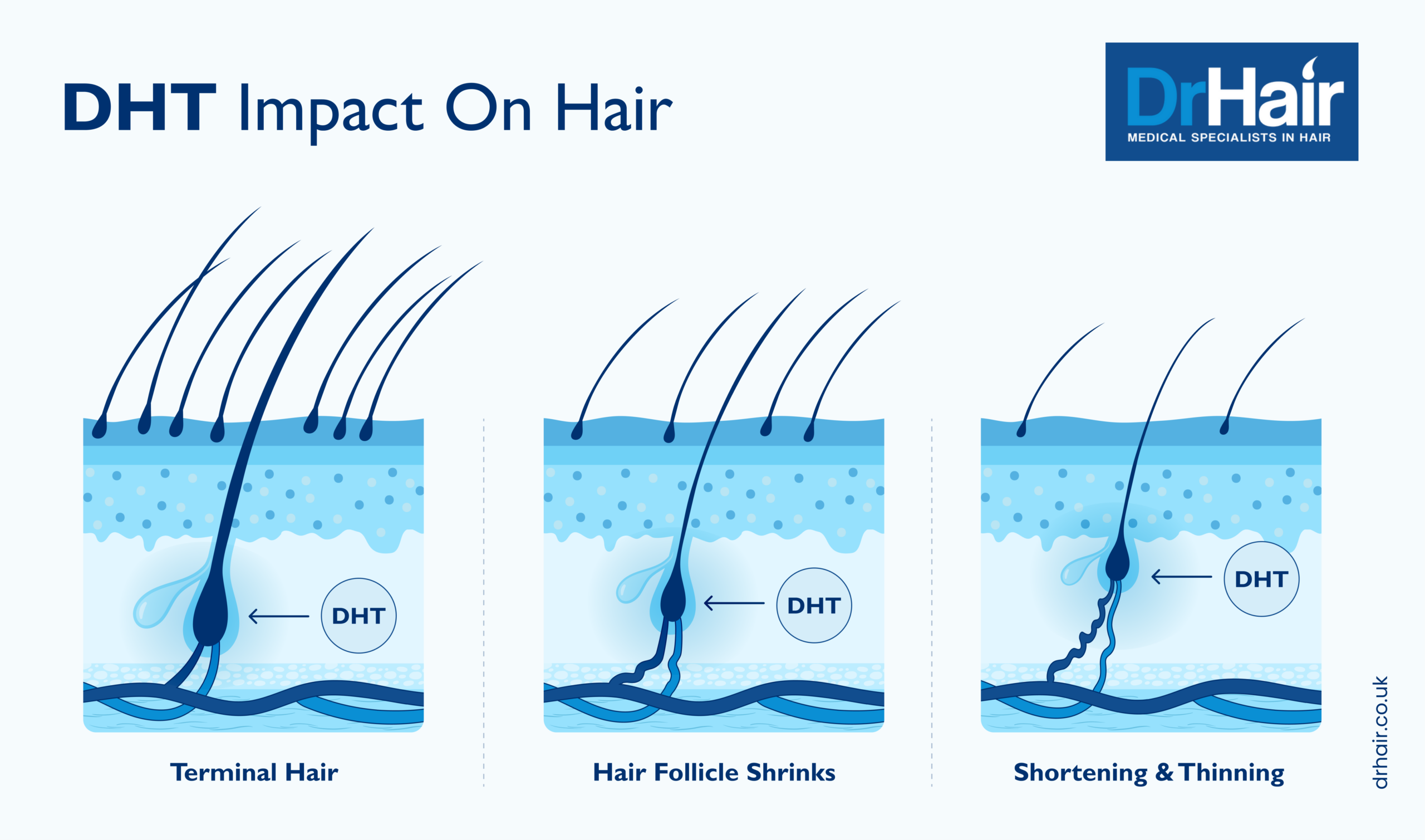
Image showing DHT’s impact on hair follicles.

Within the scalp, DHT binds to androgen receptors in genetically susceptible hair follicles, causing them to progressively shrink. Over time, this miniaturisation process leads to finer, shorter hairs until the follicles eventually stop producing hair altogether. By inhibiting 5-alpha reductase, finasteride reduces DHT levels throughout the body, slowing or halting this process and in some cases allowing weakened follicles to recover.

How much DHT does finasteride actually block?

Finasteride 1mg reduces scalp DHT levels by up to 64% and serum DHT levels by up to 71% [2]. The 5mg dose produces marginally higher reductions, but the difference is not considered significant enough to justify its use for hair loss in most cases, especially given the greater risk of side effects.

Does finasteride 1mg work for hair loss? 

Multiple clinical studies confirm that finasteride 1mg produces meaningful results for male pattern baldness [2- 5]. One long-term study tracking 126 male patients over five years found that 85.7% achieved measurable improvements in hair loss, with crown thinning showing the greatest response followed by frontal hairline recession [6].

Finasteride 1mg results can begin to appear sooner than many people expect. Studies show that hair loss can begin to slow within as little as three months of starting treatment [X], with more significant improvements in density and coverage typically visible after a year of consistent use.

It is worth noting that finasteride 1mg results tend to be strongest in men with mild to moderate hair loss. Those with more advanced or complete hair loss are less likely to see the same degree of improvement.

Does finasteride 1mg regrow hair? 

Beyond slowing hair loss, finasteride 1mg has also been shown to support visible regrowth. After one year of treatment, the likelihood of mild to moderate regrowth is 61% for crown hair loss and 37% for frontal hairline recession [5].

One study found that finasteride 1mg produced an 11% increase in hair count in men with crown hair loss after a year, with that improvement maintained through the second year of treatment [5].

Is finasteride 1mg safe? 

Finasteride 1mg is considered safe for daily use by most men, but there are some side effects and contraindications worth being aware of before starting treatment.

Finasteride is not suitable for women of reproductive age [7], as exposure during pregnancy can interfere with foetal development. Pregnant women should also avoid handling broken or crushed tablets, as the active ingredient can be absorbed through the skin.

In terms of sexual side effects, up to 3.8% of users may experience adverse effects such as erectile dysfunction or reduced libido [8]. Finasteride has also been associated with temporary reductions in sperm count and motility, though these effects reverse upon stopping treatment [8]. If you are planning to start a family in the near future, it is worth discussing your use of finasteride with a doctor beforehand.

Finasteride 1mg side effects

Reported side effects of finasteride 1mg include:

  • Initial hair shedding
  • Erectile dysfunction
  • Decreased sex drive
  • Ejaculation disorder
  • Testicular discomfort
  • Skin rashes

The majority of these affect only a small number of users and are typically mild and temporary. If you have any concerns, speak to your doctor or pharmacist before starting treatment.

For men who are concerned about systemic side effects, topical finasteride may be worth discussing with a healthcare professional. While it is not yet licensed in the UK, early clinical evidence shows promising results for androgenetic alopecia, and its localised application means lower levels of the drug enter the bloodstream.

Finasteride 1mg interactions

Finasteride can interact with a number of other medicines. Before starting treatment, make sure your doctor or pharmacist is aware of everything you are currently taking. Some of the more commonly noted interactions include:

  • Topical Abametapir
  • Diltiazem
  • Fluconazole
  • Fluvoxamine
  • Itraconazole
  • Nefazodone
  • Sirolimus
  • Tacrolimus
  • Terazosin
  • Voriconazole

This is not a complete list. You can check for further interactions using the NHS drug interactions checker. If you are taking any other medication, speak to your doctor or pharmacist before starting finasteride.

Can women take finasteride 1mg? 

Finasteride is not an approved treatment for female pattern hair loss, and the evidence for it is mixed. Trials of finasteride 1mg in women found it no more effective than placebo, although some smaller studies using higher doses reported improvement [7, 9]. Studies of women taking higher doses have also reported changes to the menstrual cycle [10]. Exposure during pregnancy can harm a developing baby too, which is why premenopausal and perimenopausal women are generally advised against using it.

Find out if finasteride is right for you with DrHair

For men experiencing male pattern baldness, finasteride 1mg remains one of the most clinically supported non-surgical treatment options available. When started early and taken consistently, it can slow hair loss and in many cases stimulate meaningful regrowth.

If you are still weighing up your options or unsure whether finasteride is right for your circumstances, taking our assessment is the most straightforward way to find out which hair loss treatments you may be eligible for.

FAQs

The relationship between finasteride and cancer is nuanced. The MHRA has recorded a small number of UK male breast cancer cases in association with finasteride use, though a direct causal link has not been established [11]. More recent research found no evidence that finasteride increases breast cancer risk [12], and some studies suggest it may actually reduce the risk of prostate cancer, though it may also be associated with more malignant forms of the disease in those who do develop it [13].

If you notice any changes in breast tissue when using finasteride, such as lumps or tenderness, speak to your doctor promptly.

Yes. Clinical studies consistently show finasteride 1mg slows hair loss and stimulates regrowth in the majority of men with male pattern baldness.

No. 1mg is the licensed daily dose for male pattern baldness in the UK and is considered appropriate for most men. If you have concerns about your finasteride dosage, speak to your prescribing doctor or pharmacist.

There is no clinical evidence to suggest one time is better than the other. What matters most is consistency. Taking it at the same time each day helps maintain steady levels of the drug in your body.

It is best to avoid cutting finasteride tablets in half unless specifically advised to do so by your doctor or pharmacist. Splitting the tablet reduces the dose, which can compromise the effectiveness of the treatment over time.

Medically reviewed by
Dr. Arora (Bmbs, Bsc)

Results in 3-6 months

Flexible subscriptions, free delivery

UK licensed experts & aftercare team

Read also

SEE A SPECIALIST

Book an online consultation
with a specialist.

Clinical review within 2-24 hrs

Treatment Plan
Empty CartYour cart is emptyAdd your favourite items to your cart.
Calculate Shipping
Apply Coupon