Finasteride is one of the most widely prescribed treatments for men with male pattern baldness. It works by blocking the conversion of testosterone into dihydrotestosterone (DHT), the hormone primarily responsible for androgenetic alopecia, the clinical term for male/female pattern hair loss. As finasteride can cause side effects in some men, many want to understand whether the benefits outweigh the risks before starting treatment.
Research into finasteride’s effectiveness is highly encouraging. In one long-term study, finasteride resulted in improved hair growth in 99.1% of 532 men with male pattern baldness over a 10-year period [1]. However, most men want to know what happens much sooner than a decade into treatment. How long does it actually take to see results, and what do those results look like in terms of visible, healthy hair growth?
In this guide, you’ll learn:
- What finasteride results typically look like at 3, 6, 9 months, as well as 1 year and 2 years.
- How long finasteride generally takes to work.
- What research says about the effectiveness of finasteride for hair regrowth.
Finasteride results after 3 months
It typically takes around four to six months for hair to become visibly thicker. For this reason, relatively few studies assess hair growth as early as three months after starting treatment, and not all finasteride users will experience noticeable regrowth at this stage.
That said, some early changes can begin to appear around 3 months. Anecdotal reports suggest hair may start to look slightly fuller by the three-month mark. Improvements are sometimes already visible, particularly around the crown. When used during the early stages of hair loss, finasteride can be an effective alternative to a crown hair transplant.
Many people taking finasteride experience an initial shedding phase within the first few weeks to months of treatment. This is a normal part of the hair regrowth cycle, and while it can be concerning, it’s usually a sign that the medication is working. Staying consistent with treatment is key, as this shedding phase is often followed by noticeable improvements.
Finasteride results after 6 months
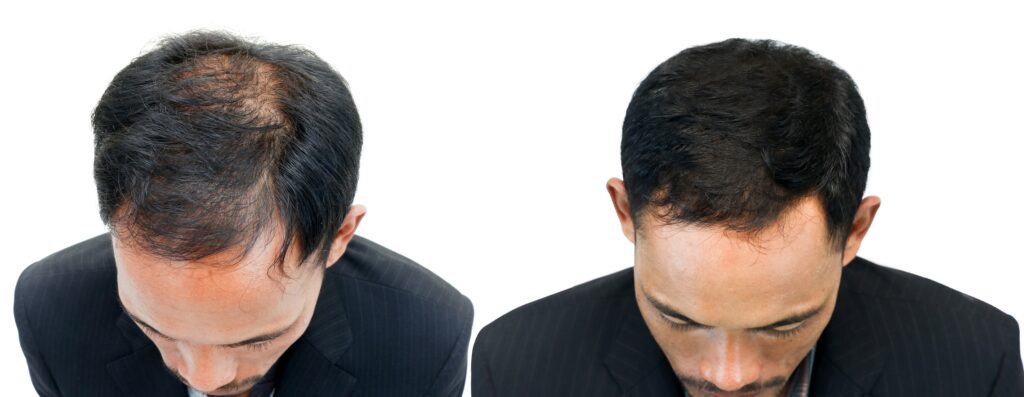
By the six-month mark, further improvements are typically noticeable. As you can see with the patient below, there is visible hair regrowth. Generally, finasteride is most effective within the first six months when treatment begins at the earliest signs of hair loss. More extensive diffuse thinning often takes longer to improve.
Finasteride results after 9 months
Anecdotal reports suggest that more noticeable results from finasteride often appear around the nine-month mark. Although relatively few clinical studies examine this specific timeframe, many users report significant improvements by this stage of treatment.
When choosing the most appropriate hair restoration approach, the extent of hair loss tends to matter more than age. However, the earlier you begin treating hair loss, the greater your chances of achieving strong results without the need for a hair transplant.
Finasteride results after 1 year
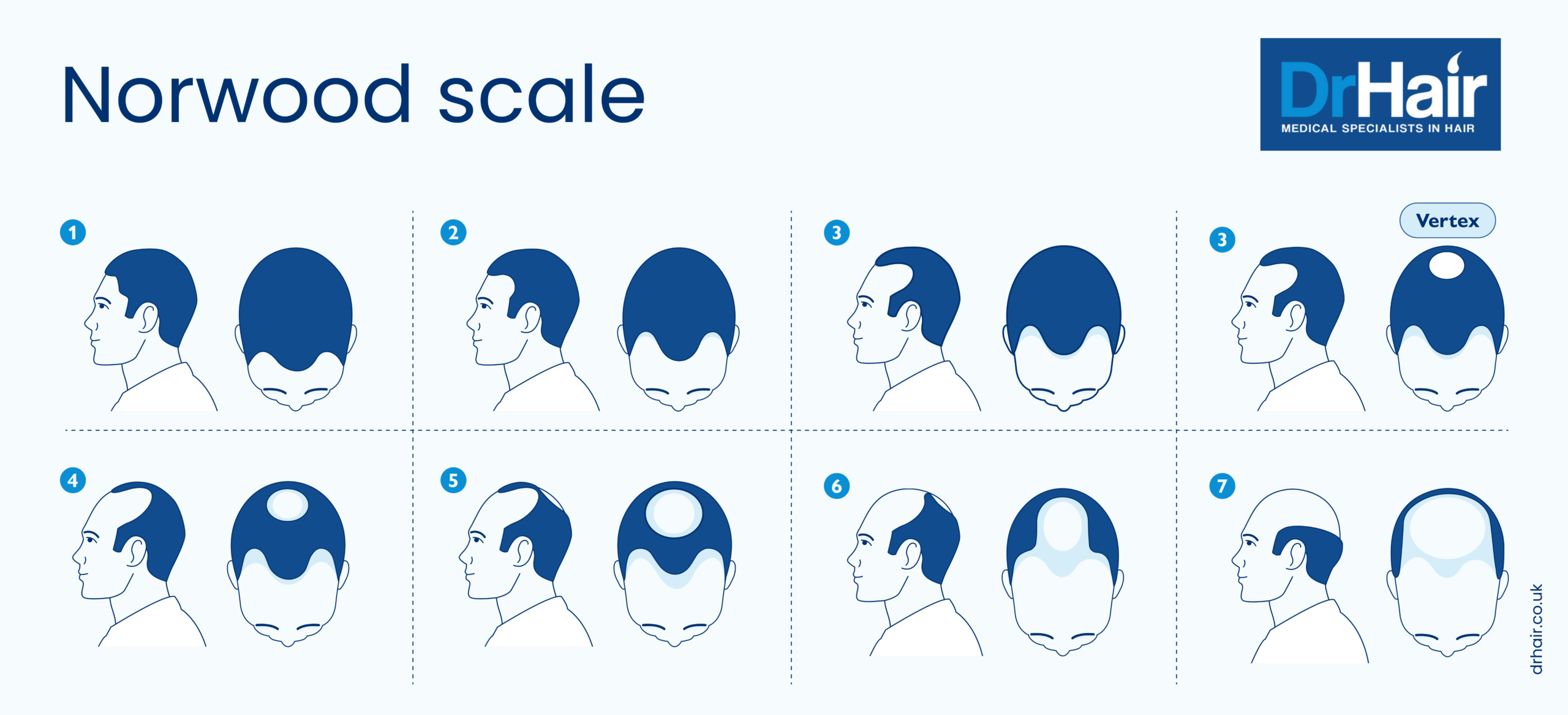
Most finasteride users experience their most significant improvements within the first year of treatment [1]. The largest increase in visible hair growth occurs within the first year of treatment. This pattern is seen across all Norwood stages. Patients at Norwood stages 1 to 3 are more likely to continue seeing gradual improvements over subsequent years, but by the end of the first year, most users will have a clear indication of their likely long-term results.
Finasteride results after 2 years
Once you start taking finasteride, ongoing use is required to maintain your results. If treatment is discontinued, DHT levels will rise again, which can lead to renewed hair shedding. For this reason, many men remain on finasteride for several years.
Although improvements can continue beyond the first year, the rate of change typically slows. Some users reach a plateau and use finasteride primarily to maintain their existing hair rather than achieve further regrowth. However, some research suggests that five years of continuous treatment is more effective at slowing or stopping hair loss than just one year of use, while ten years of finasteride use leads to even more substantial long-term benefits [1].
In terms of visible regrowth, improvements become limited after around six years of treatment. Even after nine years of continuous use, some scalp remains visible through the hair. This highlights the importance of understanding finasteride’s limitations, particularly if hair loss is already advanced at the time treatment begins.
How long does finasteride take to work?
Although finasteride begins working immediately by reducing DHT levels by approximately 70%, most people start to notice changes after three to four months, most commonly in the form of reduced hair shedding [3]. One study found that nearly 92% of men taking 1 mg of finasteride daily experienced improvement within four months of starting treatment [4].
Visible regrowth often becomes more noticeable between four and six months and may continue to improve in the months that follow, provided finasteride is taken consistently.
Further research suggests that around 65% of men experience increased hair growth after one year of continuous use. However, results vary, and some individuals may see stabilisation of hair loss rather than significant regrowth [5].
You can head to our existing article to explore how long finasteride takes to work.
See how finasteride can help you with DrHair
Finasteride is a proven, long-term treatment for male pattern baldness that works best when started early and used consistently. While results vary from person to person, most users begin to notice reduced shedding within the first few months, followed by visible improvements in hair density between six and twelve months. For many men, the greatest gains occur within the first one to two years, with continued use helping to maintain and, in some cases, gradually improve results over time.
Ultimately, finasteride is not a quick fix, but a long-term commitment. When taken consistently and with realistic expectations, it can significantly slow or stop hair loss and help preserve existing hair for years to come.
If you are curious to discuss what kind of results finasteride could get you, book a consultation with a hair loss specialist.
FAQs
The first sign finasteride is working is usually reduced hair shedding within three to four months. Over time, hair may appear thicker or fuller, especially in areas of early thinning. Because changes are gradual, it often takes six to twelve months of consistent use to accurately judge results.
Using oral and topical finasteride at the same time is generally not recommended, as both work to reduce DHT and combining them may increase the risk of side effects without clear evidence of added benefit. Most people achieve effective results using one form consistently. If you’re considering combining treatments, it’s important to speak with a healthcare professional to determine the safest and most appropriate approach for your situation.
No, 25 is not too late for finasteride. Age matters less than how much hair loss has already occurred. Finasteride is often most effective when started at the early signs of thinning or recession, and many men begin treatment in their mid-20s with good results. Starting earlier generally improves the chances of slowing hair loss.
![Patient before Finasteride treatment and after 6 months of taking 1 mg per day. Image source: [2]](https://drhair.co.uk/wp-content/uploads/2026/03/ijdvl_2017_83_1_47_188652_f7.jpg)

![The photo series below shows one patient after two to nine years of continuous Finasteride use [1]:](https://drhair.co.uk/wp-content/uploads/2026/03/Screenshot-2026-03-25-103753.png)
![Image source: [1]. From left to right on the top row we see year 2 of treatment, year 3, 4 and 5. From left to right, on the bottom, we see year 6, 7, 8, and 9.](https://drhair.co.uk/wp-content/uploads/2026/03/Screenshot-2026-03-25-103944.png)