
Finasteride is one of the most widely used and trusted treatments for male pattern baldness currently available [1]. Nearly 70% of hair transplant surgeons report that they always or often recommend finasteride to their patients, and finasteride is also generally considered to be safe and well tolerated.
Finasteride supports hair growth and can be very effective in treating hair loss from male pattern baldness. That’s part of the reason why millions of people rely on finasteride to help manage their hair loss worldwide [2] [3].
In this article, we’ll cover:
- If finasteride regrows hair.
- What finasteride is.
- How long finasteride takes to regrow hair.
- Finasteride hair regrowth results.
- When it’s too late to take finasteride.
What is finasteride?
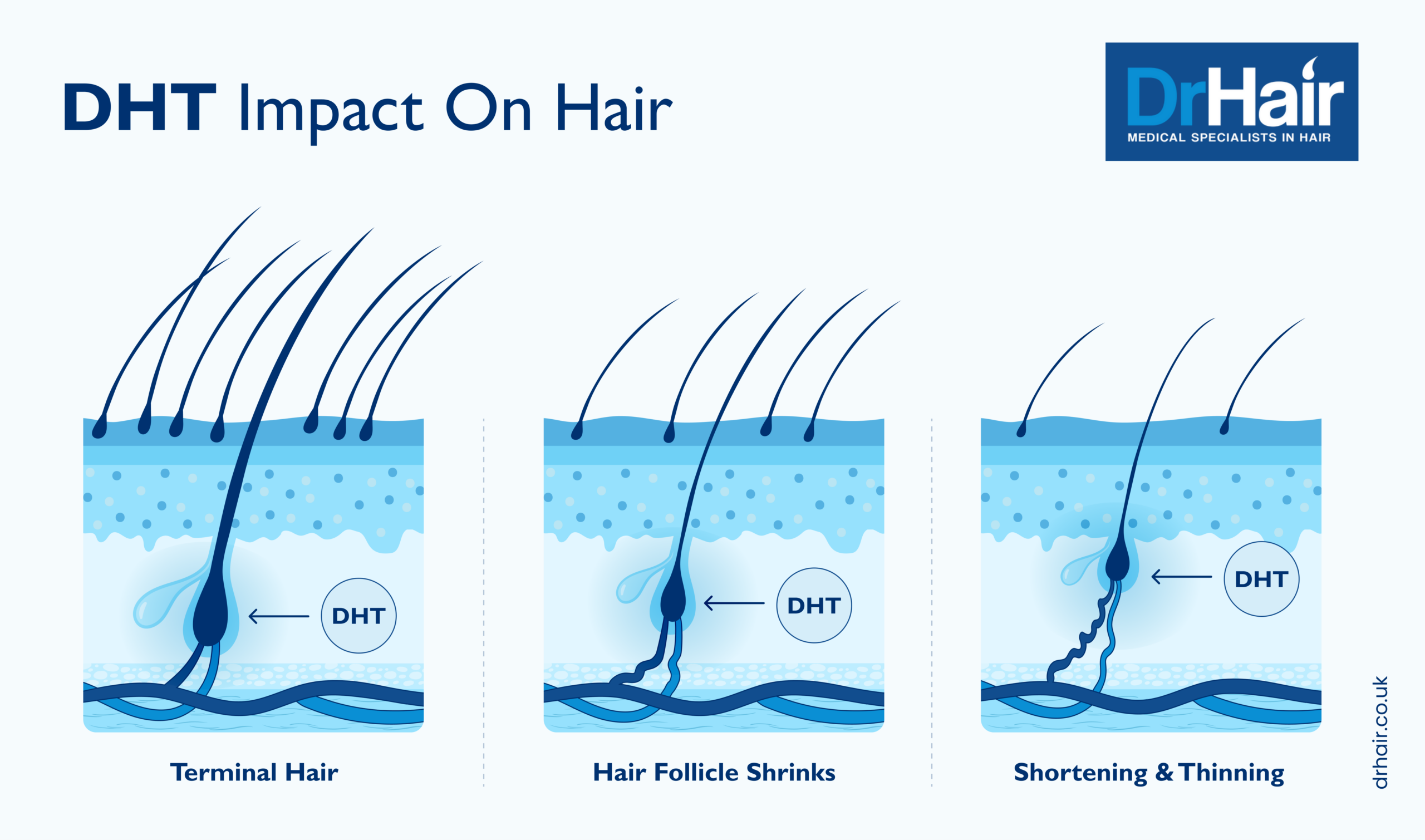
Finasteride is a common prescription medication that helps to prevent hair loss. It prevents hair loss by reducing levels of dihydrotestosterone (DHT) in the body. Specifically, it inhibits the activity of an enzyme called 5-alpha reductase, which is responsible for converting testosterone into DHT. While important in early male development, excess DHT in adulthood can contribute to conditions such as an enlarged prostate and male pattern hair loss [4].
DHT binds to androgen receptors in hair follicles on the scalp, causing them to shrink over time and eventually stop producing hair. By lowering DHT levels, finasteride helps protect hair follicles from this shrinking process, slowing or stopping further hair loss and, in some cases, supporting regrowth in follicles that have become dormant but are not yet permanently damaged.
Does finasteride regrow hair?
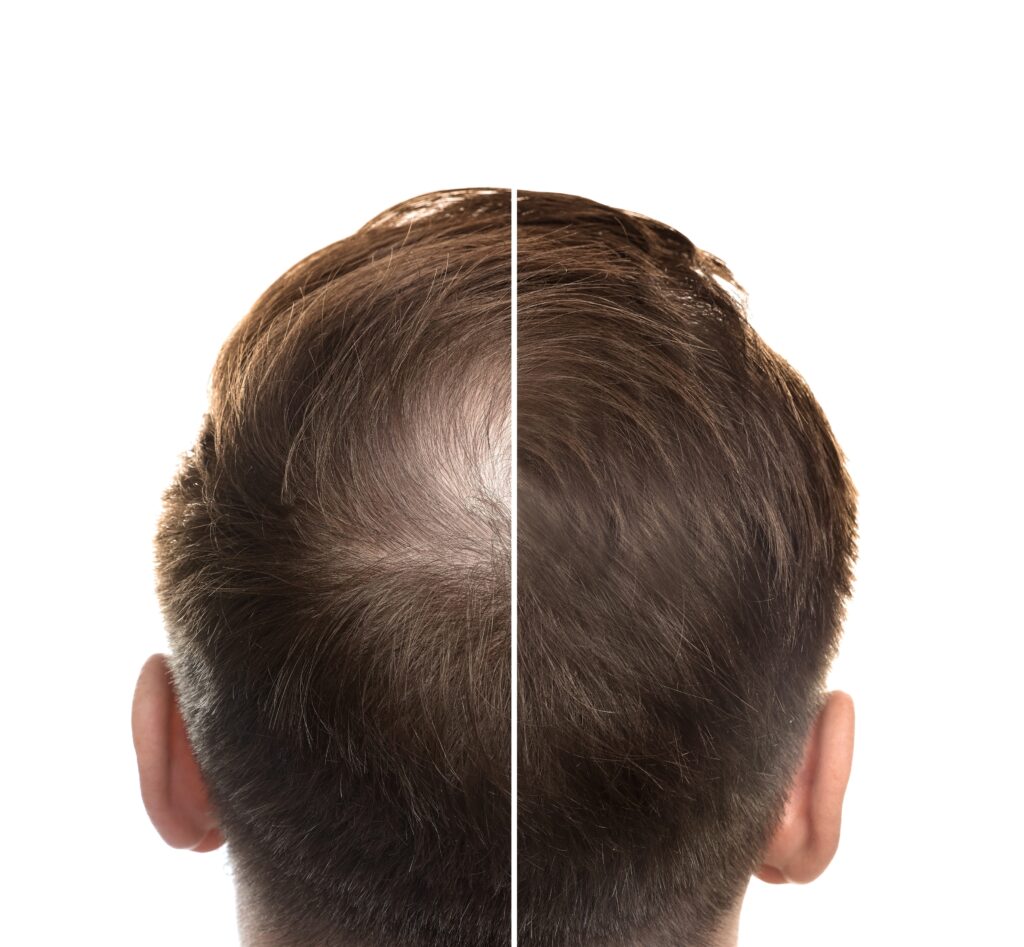
Finasteride has been shown to promote hair regrowth in many men. There is some variation in exact results, such as the stage and location of hair loss, but for example research has shown 48% of men with crown thinning experience mild to moderate regrowth after one year, which continues to improve, resulting in 66% of men after two years [2]. This study was completed on nearly 2000 men, increasing the reliability of these results.
How long does finasteride take to regrow hair?
Whilst finasteride starts working in the body straight away by lowering DHT by around 70%, most people begin to notice changes after three to four months, usually in the form of reduced shedding [5]. One study found that almost 92% of men who took 1 mg finasteride daily saw improvement within 4 months [6]. Visible regrowth may become more noticeable between four and six months, and generally improves across the following months and beyond, when finasteride is taken consistently.
Further, research suggests that around 65% of men see increased hair growth after a year of consistent use, although results vary and some may experience stabilisation of hair loss rather than regrowth [7].
As hair growth occurs in cycles, temporary shedding can occur early on; this is a normal part of the process. There is no need to be alarmed, and it’s useful to remember the overall timeline. Many men take pictures to keep a track of their progress across the 6-12 month timeline. Take a look at how long finasteride takes to work.
When doesn’t finasteride regrow hair?
It is rarely too late to start taking finasteride, providing active hair follicles remain (even if they are extremely fine hairs). As we discussed earlier, finasteride reduces levels of dihydrotestosterone (DHT), which helps slow further hair loss and can increase hair density in follicles that are still viable [8].
However, in some cases, where hair loss is complete and follicles are no longer active (meaning there is no visible stubble or miniaturised hair), finasteride alone is unlikely to stimulate regrowth. Once follicles become inactive or fibrosed, they cannot respond to anti-androgen treatment [9].
If extremely fine hairs or microscopic stubble are present, this indicates that follicles are still alive but miniaturised. In these cases, finasteride may help preserve existing hair and improve overall density by prolonging the growth phase of affected follicles [10].
Finasteride hair regrowth results
The series of images below shows finasteride results at baseline (A-B), after 6 months (C-D), after 2 years (E-F), and after 5 years (G-H). Finasteride can restore even moderate baldness to a full head of hair:
The patient has a lot more hair density through his mid-scalp, plus his hairline is thicker too.
Using finasteride across a long period of time can help you sustain your hair growth for many years. This image series shows a man’s hair at baseline (A), then the progression of hair growth and maintenance over a 10-year period (B-K):
In this example, the patient’s hair doesn’t appear to get any thicker after around year 4, but it doesn’t start to thin, either. Finasteride users help to maintain new growth, even if there is a plateau in regrowth at some point.
In some cases, you don’t have to wait years to see results from finasteride. These images show significant hair growth improvements in a matter of weeks:
Finasteride is one of the best standalone non-surgical treatments for male pattern baldness, and creates excellent hair restoration results.

Use finasteride to regrow your hair with DrHair
Finasteride is a well-studied, generally well-tolerated treatment that you can use to regrow your hair. It plays a central role in both slowing hair loss and supporting regrowth in men with male pattern baldness; particularly when treatment is started early and taken consistently.
While results vary depending on factors such as the stage and location of hair loss, the evidence shows that many men experience visible improvements over time, with others achieving long-term stabilisation.
For those who want to optimise results, finasteride is often used as part of a broader hair loss approach, including treatments such as minoxidil, which works through a different mechanism to stimulate growth. In many cases, a combination of both finasteride and minoxidil is most effective; see the results of finasteride and minoxidil treatment for hair loss.
The key to success with finasteride is realistic expectations, consistency, and early intervention. When active follicles are still present, finasteride remains one of the most effective, well-established options available for managing male pattern hair loss over the long term.
FAQ
Finasteride can regrow lost hair if the follicles are still active. Regrowth is most likely in areas with thinning or fine hairs, rather than areas that have been completely bald for a long time. Its main benefit is slowing further loss and improving density over time.
There are no known clinically significant interactions between finasteride and amitriptyline, and they are commonly prescribed together. However, you should always confirm suitability with a healthcare professional, particularly if you take other medications or have existing health conditions.
Most people notice reduced shedding after three to four months of consistent use. Visible regrowth typically appears between four and six months and continues to improve over the following year when treatment is taken daily.
For many men with male pattern baldness, finasteride is considered worth the risk due to its strong evidence base and generally good tolerability. Side effects from finasteride are uncommon and often resolve after stopping treatment, but suitability should always be assessed individually.

![Image series showing finasteride results over 5 years. Source: [11].](https://drhair.co.uk/wp-content/uploads/2026/02/Screenshot-2026-02-24-125814.png)
![Hair growth progression from 0-10 years of finasteride use. Source: [11].](https://drhair.co.uk/wp-content/uploads/2026/02/Screenshot-2026-02-24-121451.png)
![Finasteride results in 3 patients at baseline, 10 weeks, and 20 weeks. Source: [12].](https://drhair.co.uk/wp-content/uploads/2026/02/UF5.png)