

How does finasteride work?
To understand how finasteride works, it helps to look at the class of medication it belongs to: 5-alpha-reductase inhibitors. The enzyme 5-alpha-reductase occurs naturally in the body and is responsible for converting testosterone into dihydrotestosterone (DHT).
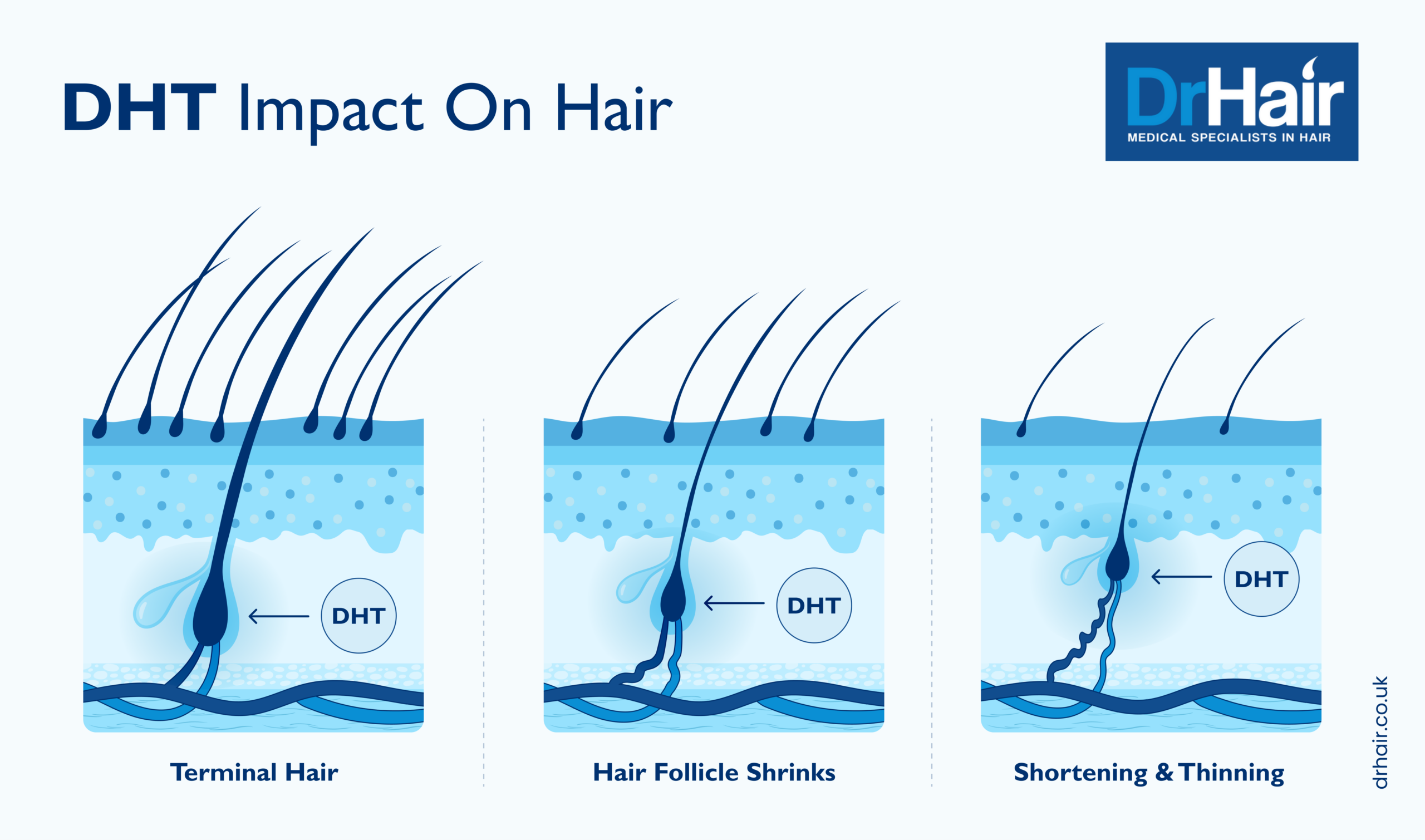
DHT is a male sex hormone that plays a key role in male pattern hair loss, as well as in a range of other bodily processes, particularly those linked to male development, such as the growth of facial and body hair [3]. It binds to androgen receptors in the scalp’s hair follicles, causing them to shrink over time. As this happens, the hair growth cycle becomes shorter, regrowth slows, and in some cases, hair production may stop entirely.
Why isn’t finasteride working?
To answer why finasteride isn’t working, we consider some key factors:
- How long you’ve been using finasteride
- What stage of hair loss you’re at
- What type of hair loss you are using finasteride for
- How frequently you are using finasteride
You haven’t been using finasteride long enough
Firstly, we need to consider how long you’ve been taking finasteride for. Increased shedding is a common side effect during the first few months, as your hair growth cycle adjusts to the medication.
Most people need to use finasteride for at least three months before noticing any changes. For some, this timeline can extend to six months or more, depending on how their hair growth cycle responds to the treatment.
Although this shedding from finasteride can make it seem as though the treatment is not working, it is a normal part of the process. If you have only recently started treatment, it is worth continuing for a few more months to see whether it settles on its own.
However, if you have been using finasteride for more than six months and are not seeing improvements in your hair loss, there may be other factors at play.
Your hair loss is too advanced
Finasteride tends to be most effective when introduced in the earlier stages of male pattern baldness, when the hair follicles are still active and capable of producing healthy strands. At this point, the medication can help slow or halt the progression of thinning and, in some cases, support partial regrowth.
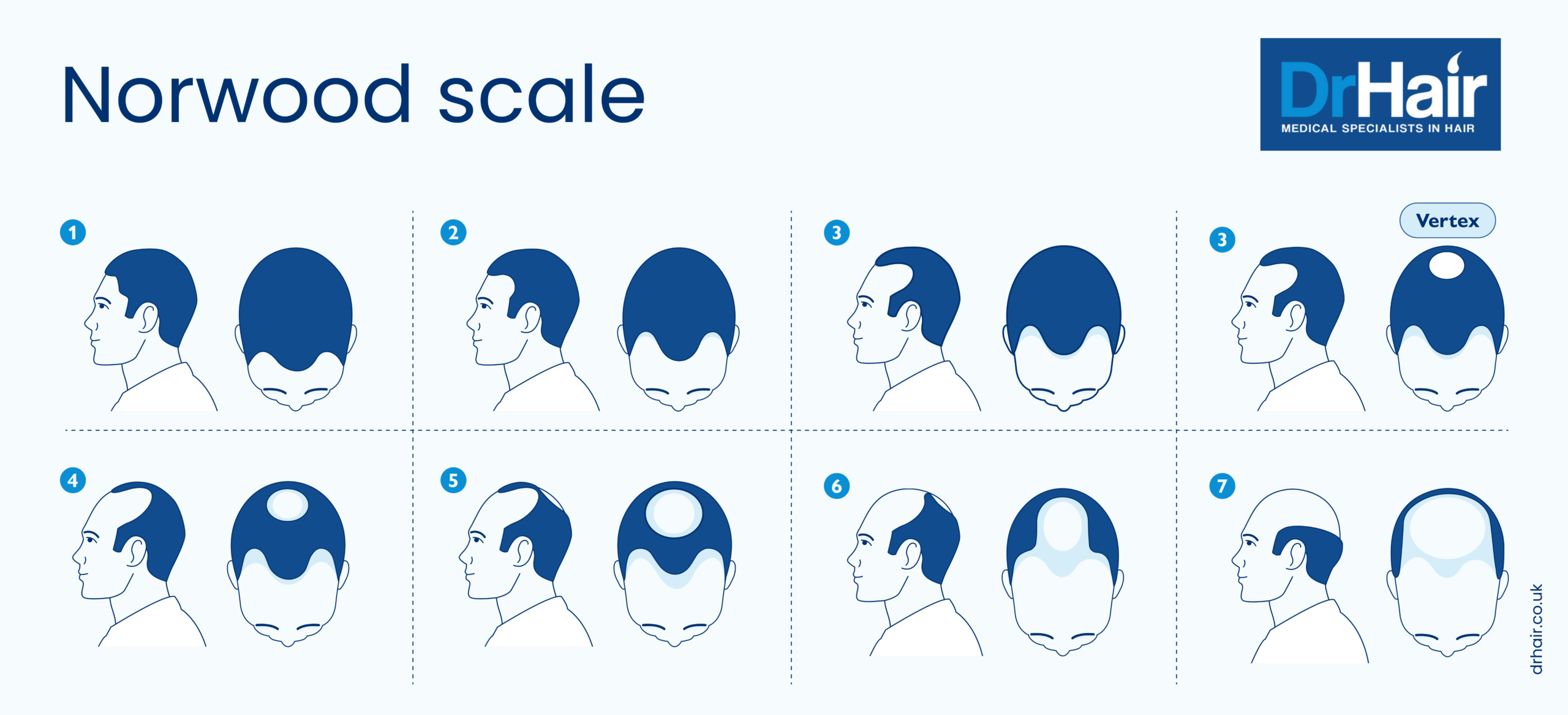
However, if your hair loss has progressed to a more advanced stage, the follicles may have become significantly miniaturised or inactive. In these later stages, finasteride is less likely to produce noticeable improvements, as it cannot revive follicles that have already stopped functioning altogether. Its primary role is to preserve existing hair rather than restore areas where loss is already extensive.
You’re using finasteride for the wrong type of hair loss
Finasteride is only effective for male pattern baldness, and in some limited cases, female pattern hair loss. If your hair loss is caused by conditions such as alopecia areata, telogen effluvium, or another form of alopecia, you are unlikely to respond to finasteride treatment.
Male pattern baldness follows a distinct and predictable pattern, which is why tools such as the Norwood Scale are often used to assess and diagnose it. This scale outlines the typical stages of hair loss, usually beginning with a receding hairline at the temples and progressing to thinning at the crown.
If your hair loss does not match these patterns, it may indicate a different underlying cause. For example, patchy hair loss, sudden diffuse shedding, or hair loss linked to stress, illness, or hormonal changes may point to other types of alopecia that require a different treatment approach.
You need to take finasteride more often
Taking less finasteride than prescribed can reduce its effectiveness. Most men are advised to take 1 mg daily to maintain consistent levels in the body. If you are using a topical form of finasteride, it is important to apply it exactly as directed on the product label to ensure optimal results.
Finasteride’s impact has plateaued
Most finasteride users see the most significant improvements in hair growth within the first year of treatment [4]. The graph below highlights the modified global photographic assessment scores for men at different Norwood stages who used finasteride over a 10-year period.
![Graph showing changes in modified global photographic assessment scores (MGPA) from before treatment through year 10 of treatment on each Norwood-Hamilton scale (N-H) group at first visit [4].](https://drhair.co.uk/wp-content/uploads/2026/07/Graph-showing-changes-in-modified-global-photographic-assessment-scores-MGPA-from-before-treatment-through-year-10-of-treatment-on-each-Norwood-Hamilton-scale-N-H-group-at-first-visit-4.png)
In many cases, improvements can continue for up to six years, depending on the stage of hair loss. However, these results do not increase indefinitely. Over time, the effects of finasteride may begin to level off, and progress can plateau. As a result, long-term users may feel that the treatment is no longer as effective as it once was (although it’s important to note that stopping finasteride normally results in continued hair shedding — you’ll start to lose the hair finasteride has maintained over the years).