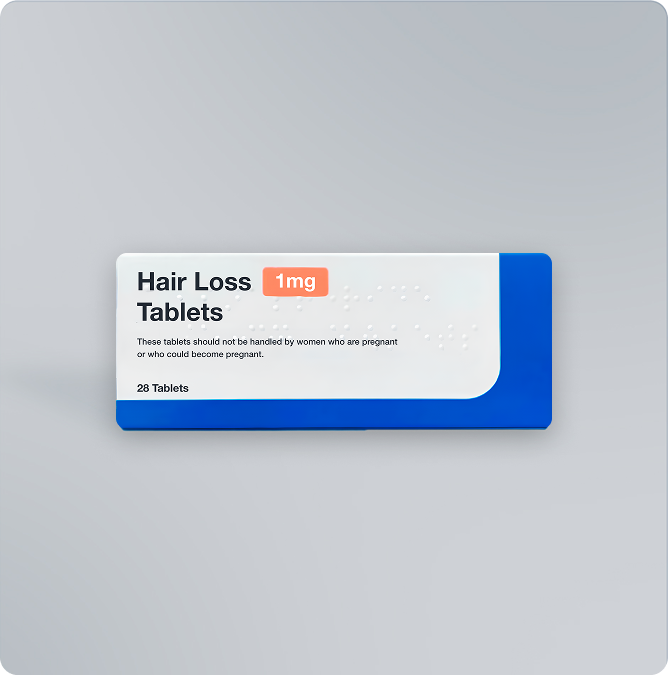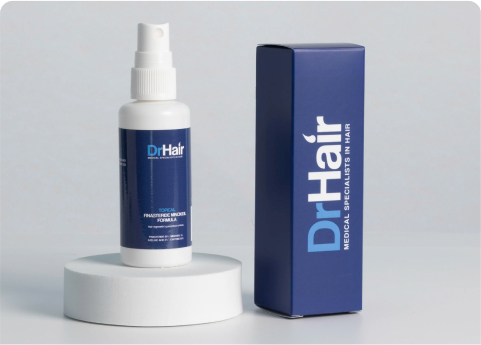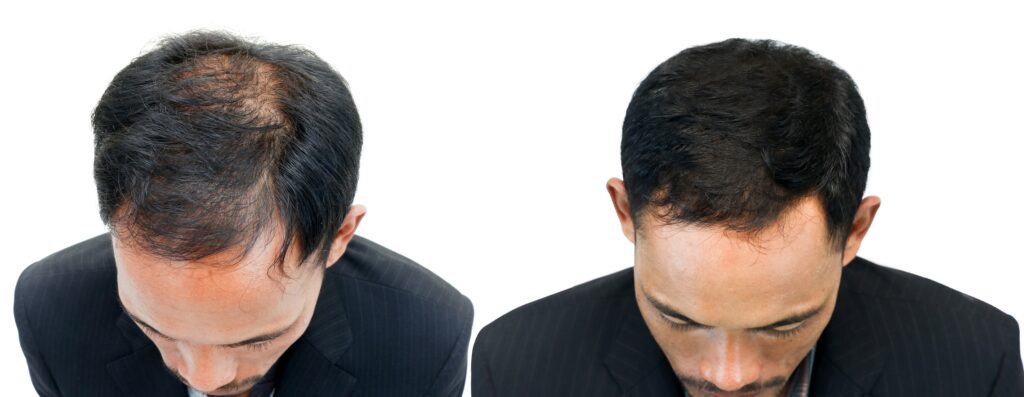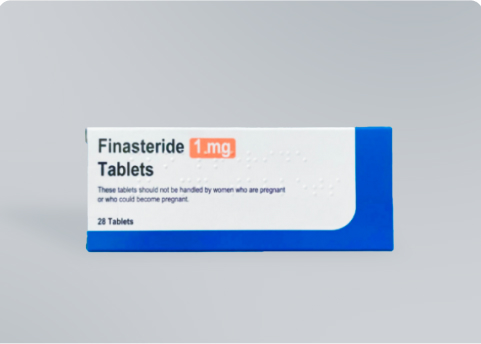

Finasteride is widely regarded as one of the most popular and effective treatments for male pattern baldness. Research shows that close to 90% of men experience improvements in hair loss after using finasteride [1].
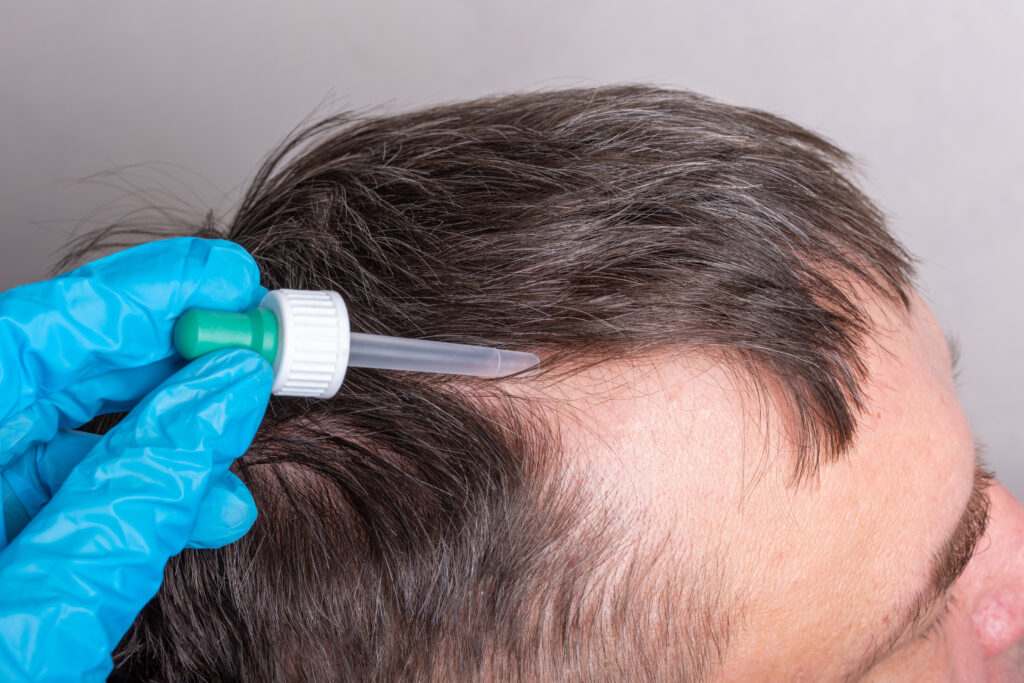
Although oral finasteride has long been the most common option for treating male hair loss, topical finasteride has gained increasing attention in recent years. Emerging research suggests that topical finasteride can help reduce hair loss when used alone or alongside topical minoxidil [2-5].
In this article, we will cover:
- Oral vs topical finasteride
- Side effects of oral and topical finasteride
- Effectiveness of oral and topical finasteride
What is finasteride?
Finasteride belongs to a class of medications known as 5-alpha reductase (5AR) inhibitors. The 5AR enzyme is responsible for converting testosterone into dihydrotestosterone (DHT).
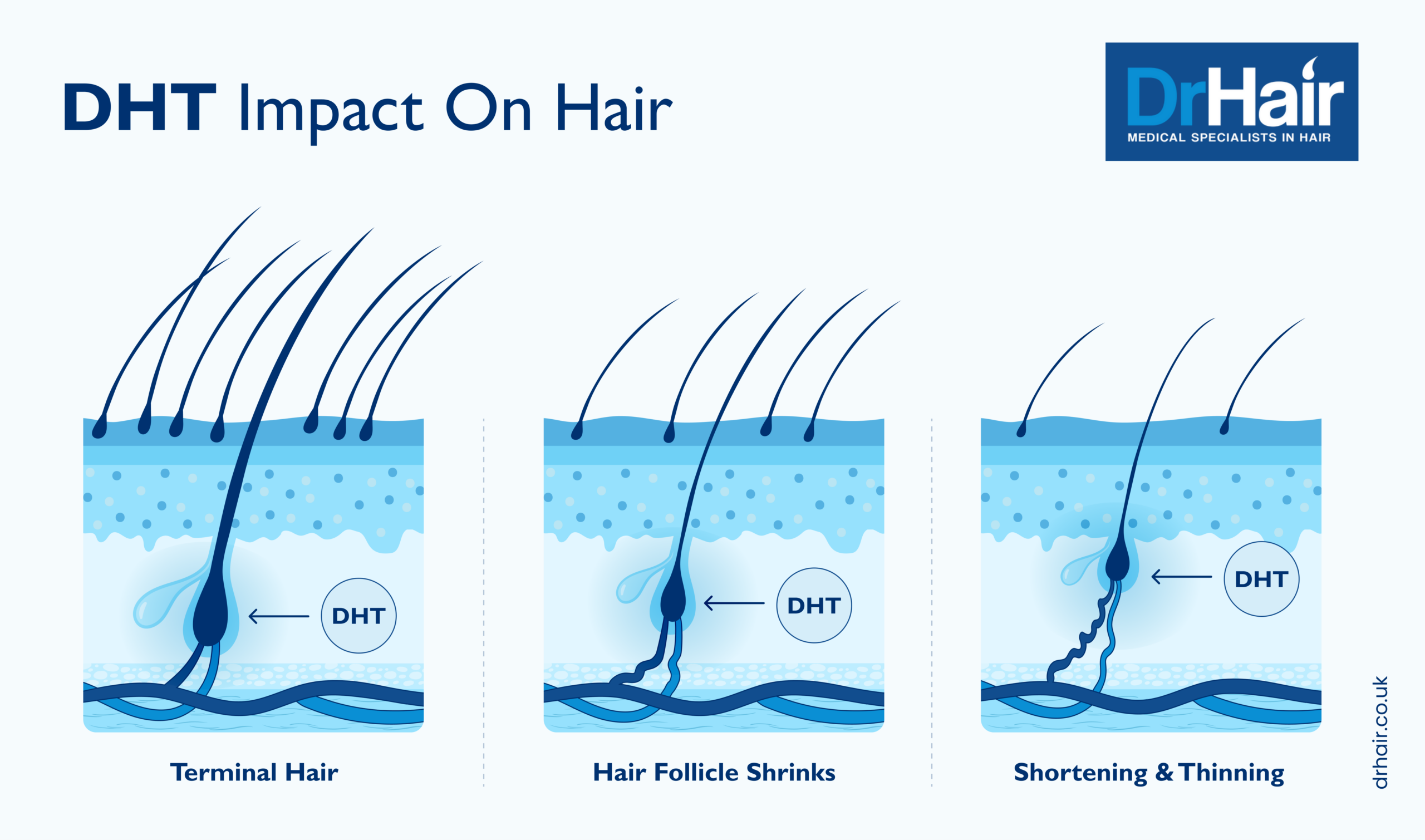
DHT is the primary hormone involved in male pattern baldness. It binds to androgen receptors in the hair follicles, causing them to gradually shrink and eventually stop producing hair. By inhibiting the 5AR enzyme, finasteride reduces overall DHT levels in the body, lowering the likelihood of DHT binding to hair follicle receptors.
Topical vs oral finasteride: what are the key differences?
Although both oral and topical finasteride contain the same active ingredient and work to reduce hair loss, there are several important differences between the two.
- Application method: Topical finasteride is applied directly to the scalp, whereas oral finasteride is taken as a tablet.
- Side effects: Topical finasteride is more likely to cause localised side effects affecting the scalp, while oral finasteride may cause side effects that affect other parts of the body.
Licensing: Oral finasteride is licensed as a hair loss treatment by the Medicines and Healthcare Products Regulatory Agency (MHRA), whereas topical finasteride is not. - Clinical evidence: Both forms can help slow or stop hair loss, but oral finasteride has been studied more extensively in clinical trials.
Topical Finasteride | Oral Finasteride | |
Strength/dosage | 0.005% to 1%* | 1 mg per day |
Side effects | Itchy or burning scalp
Skin irritation
Contact dermatitis
Erythema (red patches) | Temporary finasteride hair shedding
Erectile dysfunction
Decreased sex drive
Ejaculation disorder
Testicular discomfort
Skin rashes |
Effectiveness | Reduces scalp DHT levels by up to 70% [6]
Significantly increases hair count and density [6] | Reduces scalp DHT levels by up to 50% [6]
Significantly increases hair count and density [2] |
Eligibility | Suitable for both men and women | Suitable for men only |
Licensed for use | No | Yes |
*As topical finasteride is not licensed, there’s no approved strength. However, studies have found concentrations within this range to be safe and effective [2-3].
Side effects of topical vs. oral finasteride
Finasteride can be used either topically or orally, and the way it’s delivered plays a major role in the type and likelihood of side effects. While both forms target the same underlying mechanism, they differ in how much of the drug enters the bloodstream and how widely it affects the body. Understanding these differences can help you to decide which is right for you.
Side effects of topical finasteride
While these risks appear to be lower with topical finasteride, this form of treatment can still cause side effects of its own. Topical finasteride side effects are usually limited to the scalp and may include:
- Itchy or burning skin
- Skin irritation
- Contact dermatitis
- Erythema, or red patches
Side effects of oral finasteride
Oral finasteride has been associated with a range of systemic side effects, which may include:
- Temporary hair shedding
- Erectile dysfunction
- Reduced sex drive
- Ejaculation disorders
- Testicular discomfort
- Skin rashes
How effective is oral finasteride?
Oral finasteride is a well-established treatment for hair loss and has been shown to slow or stop hair loss in 83% of men with crown thinning and 70% of men experiencing frontal balding [1]. In addition to preventing further hair loss, oral finasteride may also promote hair regrowth.
Moderate regrowth has been observed in 61 to 66% of men with crown hair loss and in 37% of men with a receding hairline [1].
How effective is topical finasteride?
As a newer treatment option, topical finasteride has not been studied as extensively as oral finasteride. However, several studies suggest that topical finasteride can be an effective treatment for androgenetic alopecia in both men and women [2-5].
A review of seven studies examining the effectiveness of topical finasteride concluded that it is “non-inferior” to oral finasteride. This suggests that topical finasteride may be a suitable option for individuals who are concerned about the potential systemic or permanent side effects of oral finasteride treatment [2].
Why take topical finasteride instead of oral finasteride?
Oral finasteride is licensed by the MHRA and remains the most widely recommended form of the treatment, with over two thirds of ISHRS members favouring it compared with 17% who recommend topical finasteride [7].
Topical finasteride is not yet licensed, largely because it is a newer formulation with less supporting research. While it may be safe and effective for some people, oral finasteride has stronger evidence, but is associated with systemic side effects such as erectile dysfunction, which are less common with topical use.
Topical vs oral finasteride: which one is right for you?
Most men begin treating hair loss with finasteride tablets, as oral finasteride is a licensed medication that has been formally assessed for both safety and effectiveness.
That said, topical finasteride has become increasingly available in commercial formulations. It is often easier to access (with an off-label prescription, for example), particularly when combined with topical minoxidil, which has led many men to try topical finasteride before considering oral treatment.
Topical finasteride may be a suitable option if:
- You are concerned about the potential systemic side effects of oral finasteride
- You are a woman experiencing female pattern hair loss
- You are taking another medication that could interact with oral finasteride
- You want to maintain hair density after completing a course of oral finasteride
Oral finasteride may be the better choice if:
- You are a man with male pattern hair loss
- You prefer to use MHRA-approved hair loss treatments only
- You accept that there is a small risk of systemic side effects
- You would rather use a treatment that has been studied more extensively
If you are still unsure which treatment is right for you, booking a consultation with a hair loss specialist can help you explore your options and address any concerns.
FAQs
Apply topical finasteride using the spray or dropper provided, following the dosage recommended by your doctor. After applying the required amount, gently spread the solution across the affected areas of the scalp using your fingertips to ensure even coverage.
In the UK, topical finasteride spray is usually available through online clinics and pharmacies such as DrHair, after a brief consultation with a doctor, rather than over the counter.
It may be possible to use oral and topical finasteride together, but you should always speak to a healthcare professional first. Using both treatments can increase your total finasteride dose, which may raise the risk of side effects and reduce treatment effectiveness. Always consult a hair loss specialist before combining finasteride treatments.